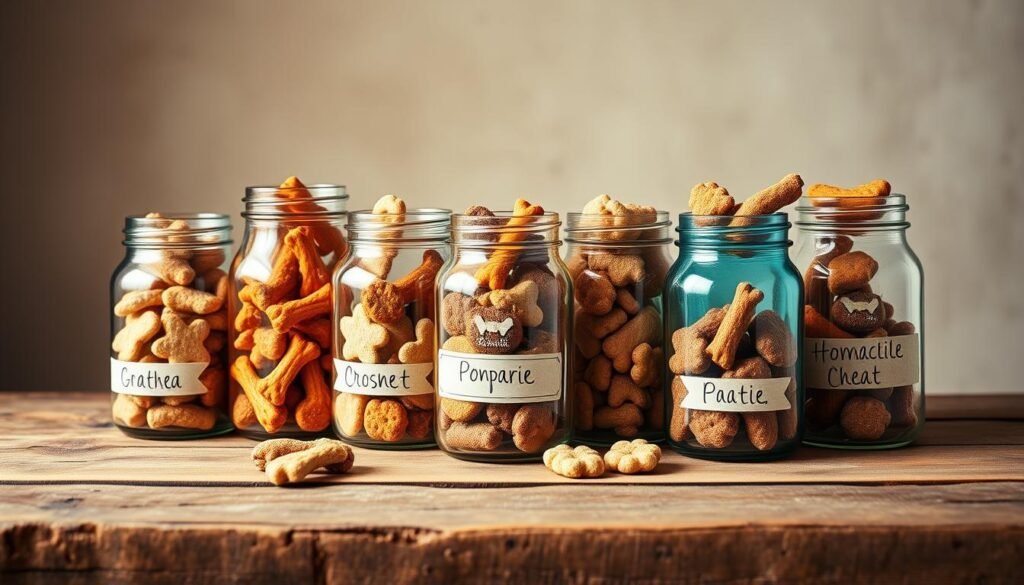
Glass treat storage jars for homemade pet snacks are one of the best ways to keep your furry friend’s treats fresh and safe.
First Posted May 29, 2025 | [lmt-post-modified-info]If you have ever worried about whether your homemade treats will stay good, you are not alone.
These simple storage solutions give you peace of mind knowing your pet’s food is protected from air, moisture, and contamination.
TL;DR
| Recipe Type | Storage Guide |
| For | Dogs, Cats, All Pets |
| Storage Time | Up to 6 months |
| Materials | Glass jars with airtight seals |
| Difficulty | Easy |
| Safety | Pet-safe and non-toxic ✓ |
Why Glass Jars Are Perfect for Your Pet’s Treats
Glass jars create the perfect environment for keeping homemade pet treats fresh and nutritious. They form an airtight barrier that prevents oxidation, which can destroy vitamins and make treats go rancid, according to the FDA Animal Veterinary division.
Unlike plastic containers, glass does not absorb odors or flavors from previous batches of treats. This means each new batch tastes exactly as it should, and you never have to worry about chemical leaching that can happen with some plastic storage containers, as noted by the ASPCA.
Before You Start
- Clean glass jars with tight-fitting lids
- Soft cloth for drying
- Labels for dating and identification
- Cool, dry storage space
Best Glass Jar Types for Pet Treats
Mason jars work wonderfully for dry, crunchy treats like homemade biscuits. Their wide mouths make it easy to add and remove treats, and the two-piece lids create an excellent seal.
Apothecary jars with rubber gaskets offer both function and beauty if you want your pet treat storage to look elegant on your kitchen counter.

Storage Instructions by Treat Type
Step 1: Cool treats completely. Never store warm treats as they create condensation inside the jar, which leads to mold.
Step 2: Choose the right jar size. Fill jars about 3/4 full to leave room for air circulation while maintaining freshness.
Step 3: Dry treats go in regular airtight jars. Store these at room temperature in a cool, dry place away from direct sunlight.
Step 4: Semi-moist treats need refrigeration. Use smaller jars so you can finish contents within 3-5 days of opening.
Step 5: Label everything clearly. Include the treat type, date made, and expiration date for easy tracking.
Storage Times by Pet Weight and Consumption
| Pet Size | Daily Treat Amount | Recommended Jar Size |
|---|---|---|
| Small pets (under 20 lbs) | 1-3 treats | 8 oz jar (1-2 week supply) |
| Medium pets (20-50 lbs) | 3-5 treats | 16 oz jar (1-2 week supply) |
| Large pets (50+ lbs) | 5-8 treats | 32 oz jar (1-2 week supply) |
These are general guidelines based on typical treat consumption. Adjust jar sizes based on how quickly your pet goes through their treats.
Common Storage Mistakes to Avoid
Storing treats while still warm. This creates moisture inside the jar and can cause mold within days. Always cool treats completely to room temperature first.
Overfilling jars. Leave about 1/4 of the jar empty to allow for proper air circulation and easier access to treats.
Mixing old and new batches. Always finish older treats before adding fresh ones to maintain quality and prevent spoilage.
Ignoring expiration dates. Even in perfect storage, homemade treats have shorter shelf lives than commercial ones.
Before giving any stored treat to your pet, give it a quick sniff and visual check. Fresh treats should smell good and show no signs of mold or unusual texture changes.
Organizing Multiple Treat Types
Group by ingredients. Keep chicken-based treats separate from beef-based ones, especially if your pet has food sensitivities.
Separate by texture. Store crunchy treats in different jars from soft ones to maintain their intended consistency.
Use color-coded labels. Create a simple system where different colored labels represent different flavors or treat types.
Rotate stock regularly. Place newer treats behind older ones and always use the oldest treats first.
Jar Substitutions and Alternatives
Never use containers made from materials that could be toxic to pets if broken or chewed, such as certain ceramics with lead glazes or plastic containers with BPA.
Food-grade stainless steel containers work as an alternative to glass, though they do not let you see the contents as easily.
Ceramic canisters with rubber seals provide similar benefits to glass but can break more easily if dropped.
Vacuum-sealed bags inside jars offer extra protection for treats you want to store for longer periods.
Cleaning and Maintenance Tips
Daily care: Wipe jar exteriors with a damp cloth to keep them looking clean and fresh.
Weekly deep clean: Wash empty jars in warm, soapy water and dry completely before refilling.
Monthly sterilization: Run jars through your dishwasher or hand wash with a baking soda solution to remove any lingering odors.
Replace worn seals: Check rubber gaskets and silicone seals regularly, replacing them when they show signs of wear or no longer create a tight seal.

Creative Organization Ideas
Chalkboard labels let you easily change treat names and dates without wasting label materials.
Photo labels showing your pet enjoying that particular treat add a personal touch and help you remember their favorites.
Seasonal decorations can make treat storage part of your home decor while keeping functionality intact.
Stackable jar systems maximize storage space in smaller kitchens or pet areas.
Where to Find Quality Storage Jars
Kitchen supply stores often carry the best selection of airtight glass containers with reliable sealing mechanisms.
Specialty pet retailers may offer jars designed specifically for pet treat storage with pet-friendly features.
Online marketplaces provide the widest selection and customer reviews to help you choose the best options for your needs.
Thrift stores and garage sales can be great sources for vintage glass jars that work perfectly for pet treat storage at budget-friendly prices.
Frequently Asked Questions
How long do homemade pet treats stay fresh in glass jars?
Dry, crunchy treats typically stay fresh for 2-4 weeks when stored properly in airtight glass jars. Soft or semi-moist treats should be consumed within 1 week and may need refrigeration for best quality.
Can I store different types of treats in the same jar?
It is best to store different treat types separately to prevent flavors from mixing and to maintain the proper texture of each treat. Different treats may also have different storage requirements and shelf lives.
Are mason jars safe for storing pet treats?
Yes, food-grade mason jars are excellent for pet treat storage. They create an airtight seal and are made from safe materials that will not leach chemicals into your pet’s food.
What should I do if I find mold in my treat jar?
Discard all treats immediately and wash the jar thoroughly with hot, soapy water followed by a diluted bleach solution. Let it air dry completely before using again, and check your storage conditions to prevent future problems.
How can I tell if stored treats have gone bad?
Look for visible mold, unusual odors, changes in texture, or any signs of insect activity. When in doubt, throw treats out – your pet’s health is worth more than saving a few treats.
Do I need special jars for freeze-dried treats?
Freeze-dried treats need extra protection from moisture, so look for jars with especially tight seals. You might also want to add a food-safe desiccant packet to absorb any moisture that might get in.
Can glass jars break if my pet knocks them over?
While glass can break, choosing thick, tempered glass jars and storing them in safe locations reduces this risk significantly. Many pet owners prefer the safety and freshness benefits of glass over the breakage concerns.
Final Thoughts
Glass treat storage jars for homemade pet snacks give you confidence that you are providing the freshest, safest treats possible for your beloved companion.
The peace of mind that comes from knowing exactly how your pet’s treats are stored is priceless.
Start with one or two quality glass jars and watch how much easier treat storage becomes.
Subscribe to Our Newsletter

