This Silicone Pet Treat Molds for DIY Dog or Cat Snacks guide shows you how to make healthy homemade treats your pets will love. If you have ever worried about what is really in store-bought pet treats, you are not alone – these molds let you control every ingredient for your pet’s safety and happiness.
TL;DR
| Recipe Type | Pet Treat Making Guide |
| For | Dogs and Cats |
| Prep Time | 10 minutes |
| Cook Time | 15-30 minutes |
| Yield | Varies by mold size |
| Difficulty | Easy |
| Vet Approved | Yes ✓ |
Silicone Pet Treat Molds for DIY Dog or Cat Snacks Guide
First Posted June 16, 2025 | [lmt-post-modified-info]Here is everything you need to know about making healthy treats at home with silicone molds. The process is simple and gives you complete control over your pet’s snacks.
Before You Start
- Food-grade silicone pet treat molds
- Mixing bowls and measuring cups
- Spatula or spoon for filling
- Clean kitchen towels
- Storage containers for finished treats
Basic Treat Recipe Ingredients
- 1 cup whole wheat flour (or oat flour for gluten-free)
- 1/2 cup natural peanut butter (xylitol-free)
- 1/2 cup plain pumpkin puree
- 1 egg
- 2 tablespoons water or low-sodium broth
- 1 tablespoon honey (optional)
Instructions
- Prep your molds. Wash silicone molds with warm soapy water and dry completely. This prevents any residue from affecting your treats.
- Mix the ingredients. Combine flour, peanut butter, pumpkin puree, and egg in a large bowl. Add water or broth slowly until the mixture holds together.
- Fill the molds. Press the mixture firmly into each mold cavity, removing air pockets. Fill slightly above the rim as the treats will shrink during baking.
- Bake the treats. Preheat oven to 350 degrees F and bake for 15-20 minutes until golden brown and firm to touch.
- Cool and remove. Let treats cool in molds for 10 minutes, then gently flex the mold to release each treat.
Serving Size by Pet Weight
| Pet Weight | Daily Treat Limit |
|---|---|
| Under 10 lbs | 1-2 small treats |
| 10-25 lbs | 2-3 medium treats |
| 25-50 lbs | 3-4 medium treats |
| 50-75 lbs | 4-5 large treats |
| 75+ lbs | 5-6 large treats |
Treats should not exceed 10% of your pet’s daily caloric intake. Adjust portions based on your pet’s activity level and overall diet.
Common Mistakes to Avoid
- Using non-food-grade silicone. Always check that molds are labeled food-grade or BPA-free to ensure they are safe for pet treats.
- Overfilling the molds. Fill just slightly above the rim – treats expand during baking and may overflow if you add too much.
- Not checking for air pockets. Press mixture firmly into molds to eliminate air bubbles that can cause treats to crumble.
- Removing treats too quickly. Let treats cool in molds for at least 10 minutes to prevent breaking during removal.
Test First
Make a small test batch first to check how your specific molds work with your recipe. Each mold design may need slight timing or technique adjustments.
Making a Larger Batch
- Double the recipe. Most silicone mold recipes scale up easily – just use a larger mixing bowl.
- Work in batches. If you have limited molds, bake in multiple batches rather than rushing the filling process.
- Prep ingredients ahead. Mix dry ingredients in advance and store in airtight containers for quick treat making.
- Freeze portions. Make large batches and freeze portions of dough for future use – thaws quickly when needed.
Substitutions and Add-Ons
Sweet potato puree – Use instead of pumpkin for a different flavor and extra beta-carotene.
Oat flour – Replace wheat flour for dogs with grain sensitivities. Grind old-fashioned oats in a food processor.
Coconut oil – Substitute for peanut butter in smaller amounts. Provides healthy fats and a different flavor.
Plain Greek yogurt – Add 2 tablespoons for probiotics and extra protein. Reduce other liquids slightly.
Freeze-dried meat powder – Sprinkle in for extra flavor appeal, especially for finicky eaters.
Storage Tips

Room temperature. Store treats in airtight containers for up to 5 days in a cool, dry place away from direct sunlight.
Refrigerator. Extend freshness up to 2 weeks by refrigerating in sealed containers. Let treats come to room temperature before serving.
Freezer. Freeze treats for up to 3 months in freezer-safe bags or containers. Thaw individual treats as needed.
Mold care. Wash silicone molds immediately after use with warm soapy water. Air dry completely before storing to prevent mold growth.
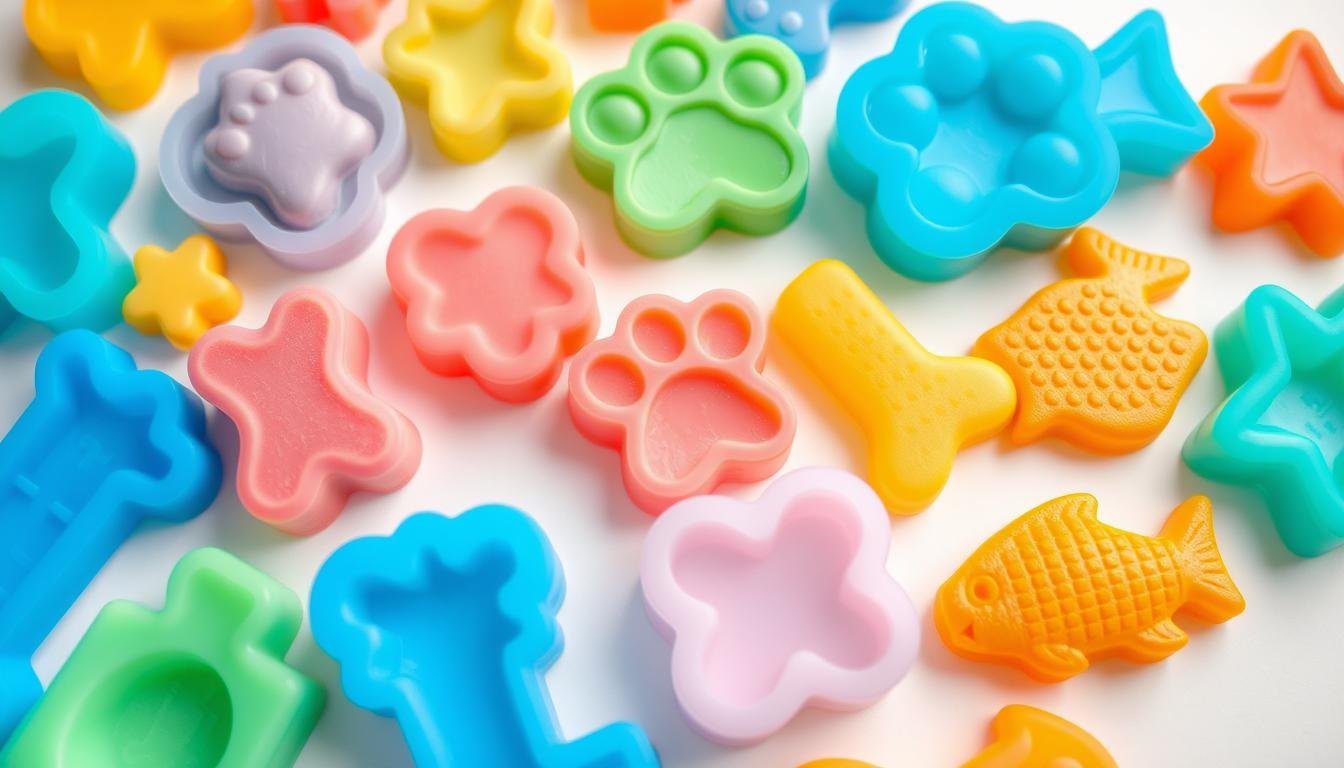
Why Silicone Pet Treat Molds Are Good for Your Pet
Silicone molds let you create portion-controlled treats that fit your pet’s exact dietary needs and size requirements.
The FDA Animal Veterinary division recommends using food-grade materials when preparing homemade pet food and treats.
Making treats at home eliminates preservatives, artificial colors, and mystery ingredients often found in commercial treats.
According to the ASPCA, controlling treat ingredients helps prevent allergic reactions and supports better digestive health in pets.

Frequently Asked Questions
Are silicone pet treat molds safe for both baking and freezing?
Yes, food-grade silicone molds are safe for temperatures from -40 degrees F to 450 degrees F. They work perfectly for both baked treats and frozen snacks.
How do I know if my silicone molds are food-grade quality?
Look for labels that say “food-grade,” “BPA-free,” or “FDA-approved” on the packaging. Quality molds should also be odorless and have a smooth, non-sticky surface.
Can I use the same molds for both dog and cat treats?
Absolutely, as long as you wash them thoroughly between uses. Just make sure to use appropriate recipes and ingredients for each pet type.
How often should I replace my silicone pet treat molds?
Quality silicone molds can last several years with proper care. Replace them if you notice cracks, permanent staining, or if they become sticky or develop an odor.
What size treats work best for training purposes?
Training treats should be small enough to eat in one bite without chewing – typically pea-sized for small dogs and marble-sized for larger dogs.
Can I make grain-free treats using silicone molds?
Yes, substitute regular flour with alternatives like coconut flour, almond flour, or ground oats. You may need to adjust liquid ratios slightly for proper consistency.
How do I prevent treats from sticking to the molds?
Quality silicone molds should not need greasing, but if treats stick, lightly dust with flour or use a tiny amount of coconut oil. Making silicone pet treat molds for DIY dog or cat snacks gives you complete control over your pet’s treat ingredients and quality.
Final Thoughts
Silicone pet treat molds for DIY dog or cat snacks open up a world of healthy, homemade possibilities for your beloved pets.
You know exactly what goes into every bite, and your pets get treats made with love and the best ingredients you can provide.
Start with a simple recipe this week and watch how excited your pets get for treat time when they taste the difference homemade makes.
Subscribe to Our Newsletter

